
Earlier this week I facilitated a workshop for scientists on project management and what an eye-opener it was! Certainly for me, but I feel even more so for the participants.
The reasons?
My focus in the workshop was not on learning how to manage projects per se, as they’d all been involved and experienced in many projects, but how could this group (who work together in the same team and organisation) agree on a ‘common framework’ which would be followed for all their projects?
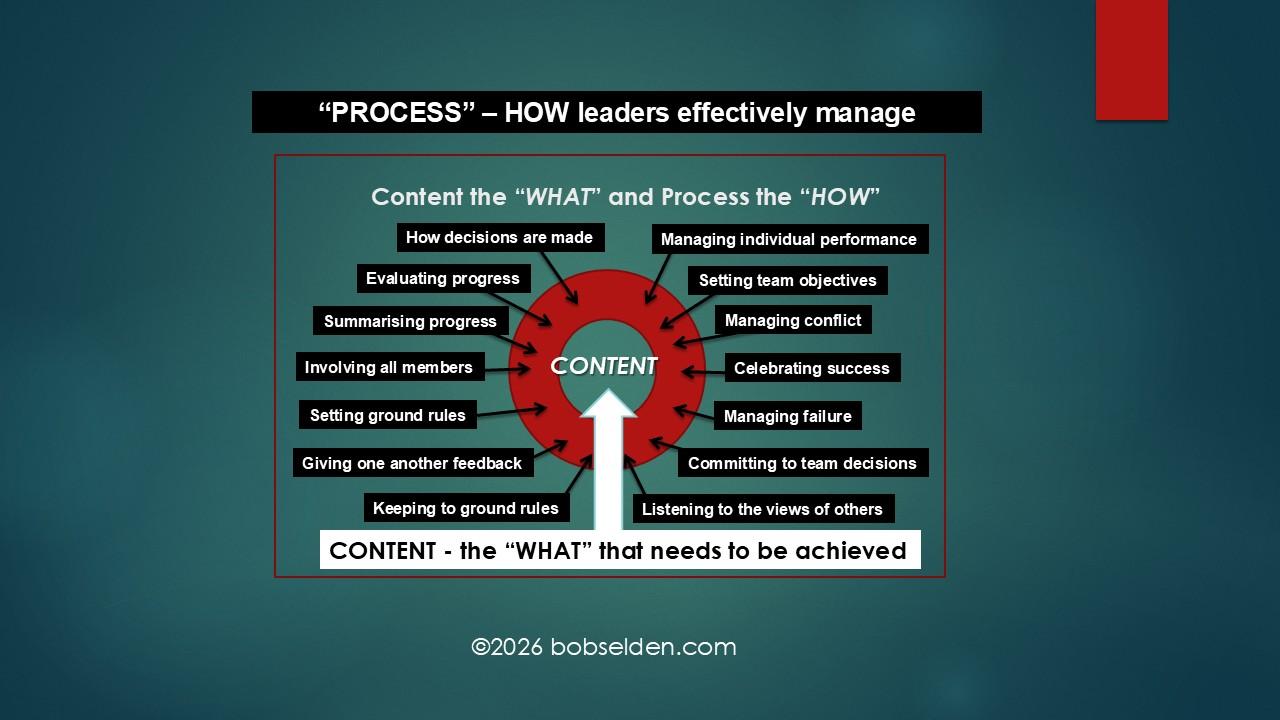
To develop this common framework, I decided they’d need to have a good understanding of ‘process management skills’ – the skills all good managers use when working with groups and teams to achieve success. I term these the “How to” skills – the process managing skills applied when managing the content – the “What” the project is expected to achieve.
Both the How and the What are essential, and in watching and working with many teams, I see those that are successful employ the process skills well to ensure the content is managed to achieve their aims. Those teams who flounder tend to spend very little time on managing the team process (e.g., strategy, decision making, managing conflict, etc.) and often get bogged down in the quagmire of ever increasing data.
And when discussing this “How” and “What” approach with my client, we decided ...
on the theme for the day to be ‘curiosity’ – “How to use one’s curiosity to widen one’s research in the early phases of the project”, before delving into the depths of the data and scientific analysis (the “What”). Then bringing all this together by using good process management skills to follow a common framework of project management.
So, how to develop this drive for curiosity? When preparing for the workshop, I could have delved into my extensive material for managing projects, but I thought “If I’m asking the scientists to be more curious, I need to set the example myself”. It just so happened that at the time I read an article which piqued my curiosity about changes Sweden were making to their education system.
Sweden, after being one of the first countries in the world to issue tablets to all school students twenty years ago, has now reversed this policy and “gone back to basics” with students required to hand-write notes and use textbooks (where available) for research. Although some internet access is still permitted. The Swedish government has allocated over €100 million in national funding specifically to remove unnecessary screen time during the school day and purchase physical textbooks for students.
Why such a change? There’s been three main reasons.
- Falling Test Scores: They found a concerning drop in international test scores, including a notable decline in reading comprehension.
- Cognitive Research: Health agencies, including the prestigious Karolinska Institute, warned that heavy screen use and digital reading impair concentration, hinder deep information processing, and reduce vocabulary growth.
- Re-prioritizing Foundational Skills: Their research emphasized that young children in particular, need the tactile experience of using pen and paper to properly develop memory, handwriting quality, and fine motor skills.
“Ah, ha, that’s it”, I thought. I’ll have these scientists writing out their notes for the day, rather than typing them into tablets or laptops. We issued blank notebooks titled, “My Curiosity Log” and encouraged participants to randomly write their thoughts down as they arose, plus of course the process and results of group work during the day.
Additionally, I paired people for “curiosity” discussions (one of which was walking together in the lovely grounds of where the workshop was held) and set them a weekly catch-up with their partner for the next three weeks to discuss their progress. The good news is that the client saw pairs the day after the workshop discussing their curiosity drive and importantly, the agreed common project management process, over coffee.
Voilà! A successful workshop and a happy client.